If you have been diagnosed with adenomyosis, you already know how overwhelming the symptoms can be. The severe, knife-like menstrual cramping, heavy bleeding, and deep pelvic pressure can turn every month into a physical ordeal.
To make matters worse, many women with adenomyosis are given a discouraging outlook once conservative treatments reach their limit. While hormonal medications and IUDs can often manage symptoms effectively, they don’t cure the underlying condition — and if symptoms persist despite medication, or if a woman cannot tolerate hormone therapy, many patients are told that a hysterectomy is their only remaining option.
Hearing that major surgery and losing your uterus is your only next step can be frightening. But is it true?
The short answer is no. Uterine Artery Embolization (UAE) for adenomyosis is a highly effective, uterus-preserving, non-surgical treatment option — and the clinical evidence behind it is stronger than most patients ever hear about.

What Is Adenomyosis — and Why Is It So Difficult to Treat?
To understand how embolization helps, it helps to first understand what causes adenomyosis.
Normally, the tissue that lines the inside of your uterus (the endometrium) stays on the surface, shedding each month during your period. In adenomyosis, this endometrial tissue breaks through the barrier and grows deep into the muscular wall of the uterus (the myometrium).
Every month, as your hormones cycle, this trapped tissue thickens, breaks down, and bleeds inside the muscle wall — causing chronic inflammation, severe swelling, and intense pelvic pain.
Why Traditional Surgery Can’t Simply “Cut It Out”
Because the diseased tissue is interspersed throughout the muscle rather than forming a distinct, removable mass like a fibroid, traditional surgeons cannot simply excise it. Removing the tissue surgically means removing the uterus entirely — which is why so many patients are funneled toward hysterectomy once medications stop working.
Uterine artery embolization for adenomyosis offers a fundamentally different path.
How Uterine Artery Embolization Targets Adenomyosis
Interventional radiology takes a completely different approach to adenomyosis. Instead of attempting to surgically cut out the tissue, UAE starves the ectopic tissue from the inside out — using your body’s own vascular system.
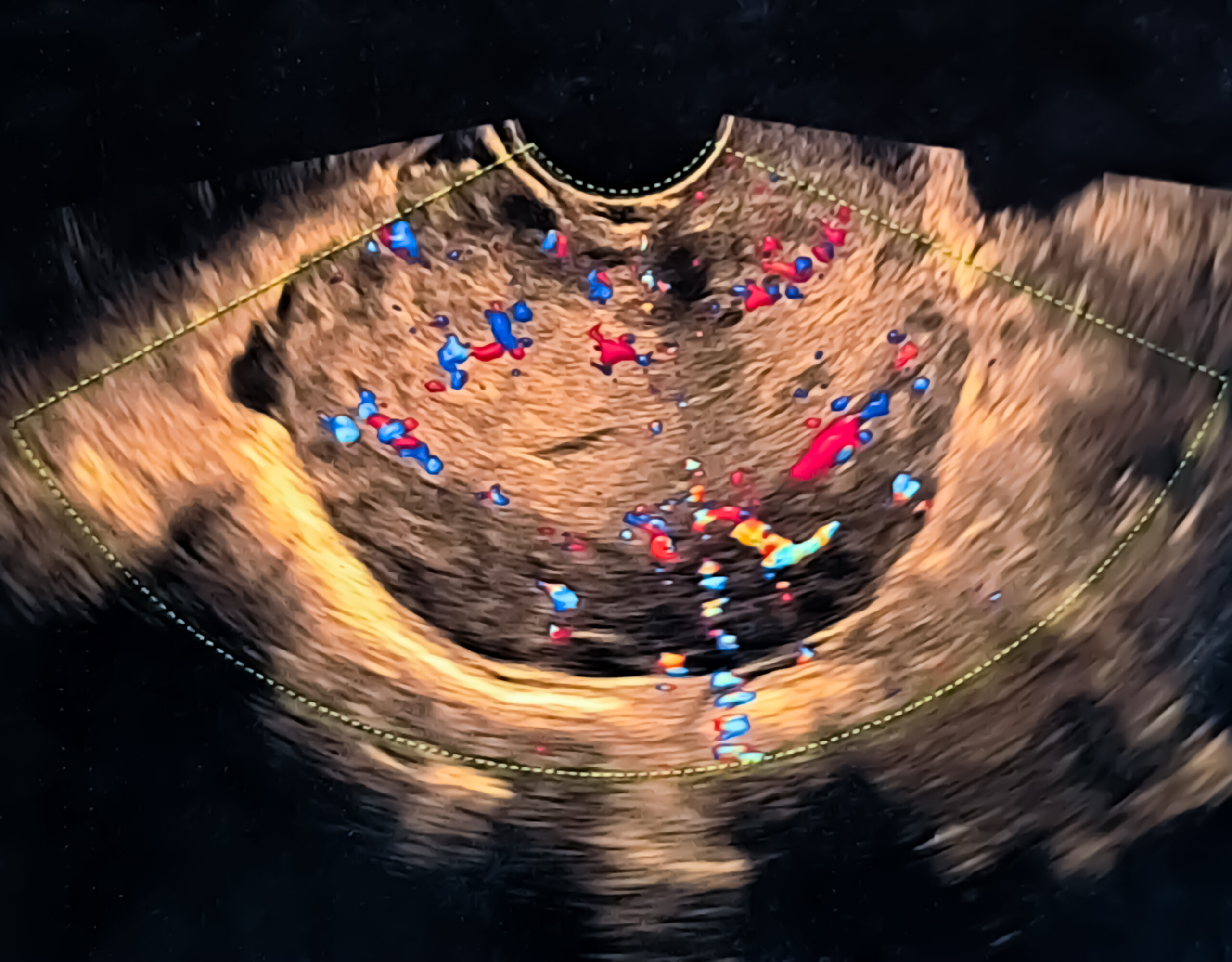
Adenomyotic tissue is hypervascular, meaning it relies on a dense network of abnormal blood vessels to survive and swell each month.
The Step-by-Step UAE Procedure
During a UAE procedure at My AIM Health:
- An interventional radiologist makes a tiny, pinhole entry point in the wrist or groin.
- Guided by live, low-dose X-ray imaging, a microscopic catheter is navigated directly into the uterine arteries.
- Microscopic, biocompatible particles are released into the uterine blood flow.
- The particles lodge in the tiny vessels feeding the ectopic adenomyotic tissue.
How the Embolization Process Works Inside the Body
Without a constant blood supply, the abnormal endometrial glands embedded within the uterine wall break down, shrink, and regress. Meanwhile, the normal, healthy uterine muscle receives blood flow from surrounding vessels and recovers naturally. The result is meaningful, lasting symptom relief — without removing a single organ.
What the Clinical Research Shows
For years, UAE was considered primarily a fibroid treatment. Today, a robust and growing body of global clinical literature confirms that uterine artery embolization for adenomyosis is exceptionally effective:
Significant Symptom Relief
Studies published in major radiological and gynecological journals show that 75% to 85% of women with adenomyosis experience long-term, significant relief from heavy menstrual bleeding and severe pelvic pain following UAE.
Reduction in Uterine Volume
Follow-up MRI scans consistently reveal a marked reduction in overall uterine size and significant thinning of the junctional zone — the chronically swollen area of the uterine muscle wall that drives so much of the pain and pressure in adenomyosis.
Effective for Combined Fibroid and Adenomyosis Cases
It is very common to have both fibroids and adenomyosis simultaneously. UAE is one of the only non-surgical pelvic treatments capable of addressing both conditions at the same time — in a single outpatient procedure.
UAE vs. Hysterectomy: Key Advantages of the Non-Surgical Approach
Choosing uterine artery embolization for adenomyosis over a traditional hysterectomy offers significant benefits at every stage of the experience — before, during, and after treatment.
Preserves Your Uterus
UAE leaves your natural anatomy completely intact. For women who want to preserve their uterus — whether for fertility reasons, personal preference, or simply the desire to avoid organ removal — this distinction matters enormously.
Faster Recovery
A hysterectomy typically requires 6 to 8 weeks of painful recovery. Most UAE patients return to their normal work and daily routines within 7 to 10 days. That’s not a minor difference — it’s weeks of your life back.
Outpatient Convenience
UAE is performed under light sedation without general anesthesia. There are no scalpels, no stitches, no surgical scars, and no overnight hospital stays. Most patients go home the same day and begin recovering in the comfort of their own home.
Take Control of Your Pelvic Health at My AIM Health
If you have been told that a hysterectomy is your only choice after medications have fallen short, it is time to get a second opinion from a specialist who sees your options through a vascular lens.
At My AIM Health, our board-certified interventional radiologists have extensive experience using uterine artery embolization to treat complex pelvic conditions, including adenomyosis. We are committed to helping you eliminate debilitating pain and heavy bleeding while preserving your body and your options.
Contact our clinic today to schedule a consultation and find out if UAE is right for you.