Interventional radiology (IR) is a medical specialty that uses imaging — X-ray, ultrasound, and CT — to guide minimally invasive treatments for conditions like fibroids, an enlarged prostate, peripheral artery disease, and chronic joint pain, without open surgery.
If you were told that a doctor could treat a painful medical condition deep inside your body—like a uterine fibroid, an enlarged prostate, or chronic knee arthritis—without making a single surgical incision, you might think it sounds like science fiction. Yet, this is exactly what happens every single day in the field of Interventional Radiology (IR).
Often described as medicine’s best-kept secret, interventional radiology is changing the way we think about surgery. But what exactly is IR, and what kind of training does a doctor need to master this highly specialized field? Let’s pull back the curtain on this medical superpower.
What is Interventional Radiology?
Traditionally, medicine was divided into two distinct worlds. Diagnostic radiologists looked at images (like X-rays, MRIs, and CT scans) to figure out what was wrong, while surgeons used scalpels to open the body and fix the problem.
Interventional radiology bridges that gap.
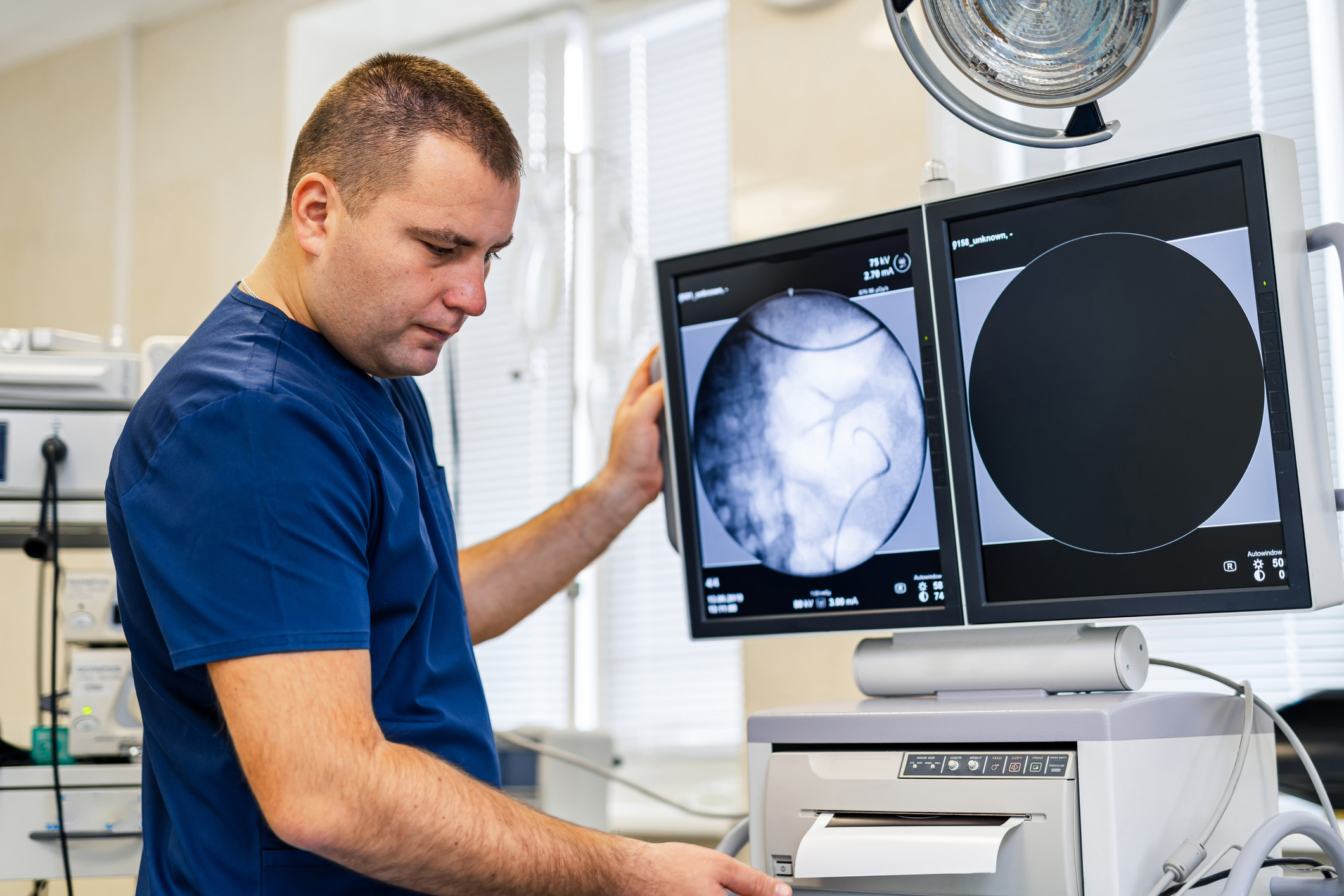
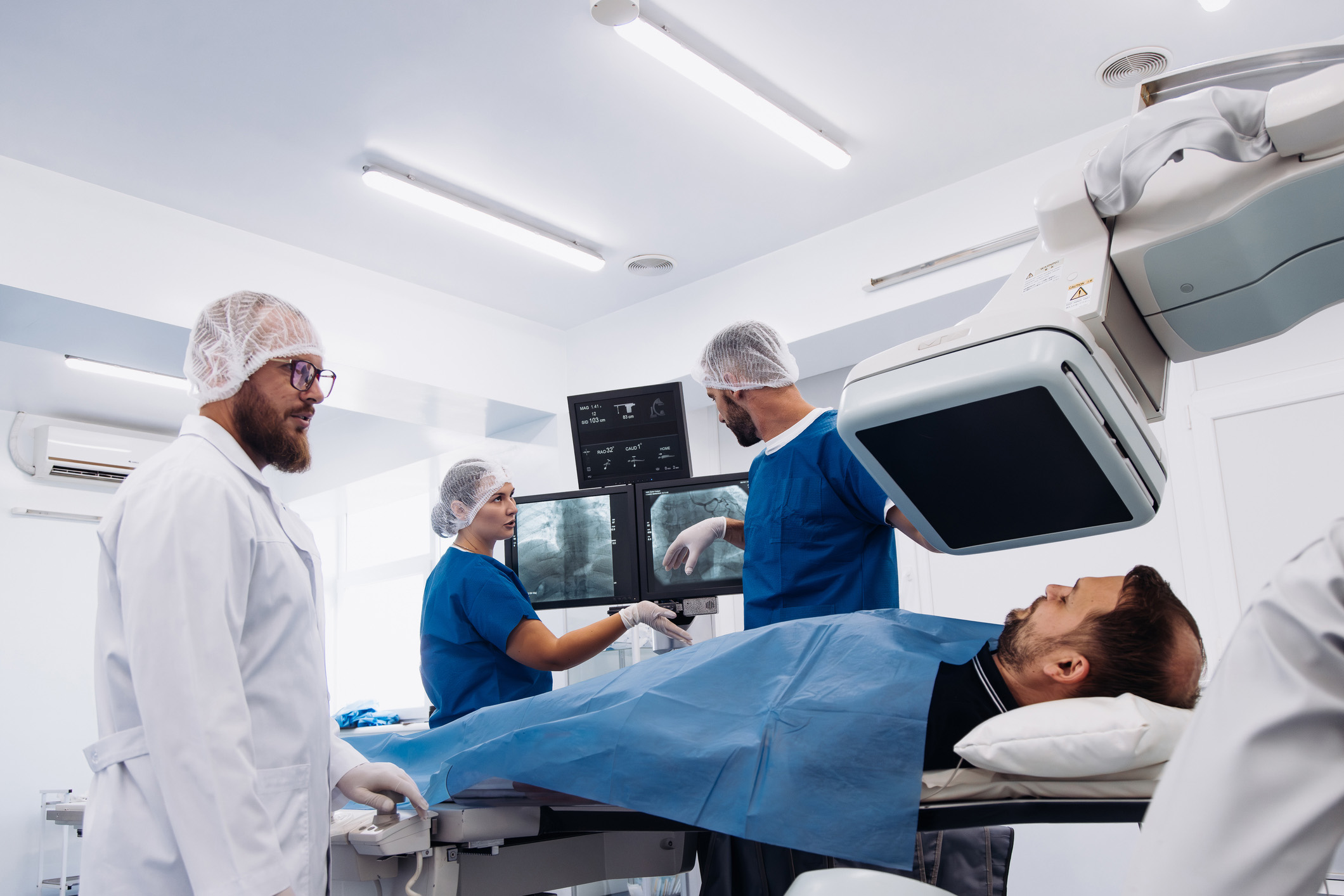
An interventional radiologist doesn’t just read the scan; they use it as a live, real-time roadmap to treat the disease directly at its source. By using advanced imaging technology—such as fluoroscopy (live X-ray), ultrasound, and CT scans—IR physicians can guide tiny, flexible tubes called catheters and microscopic instruments through the body’s blood vessels or through tiny nicks in the skin.
Because these instruments are so small, there is no need for large open incisions, general anesthesia, or lengthy hospital stays. Many IR procedures are performed on an outpatient basis, meaning patients walk in and walk out the very same day with nothing more than a small bandage.
Common IR procedures include embolization (delivering microscopic beads to reduce blood flow to a tumor, fibroid , or enlarged prostate), angioplasty/stenting (opening up blocked blood vessels to restore circulation), and other treatments for chronic pain.
The Road to Becoming an Interventional Radiologist
Because interventional radiology requires a doctor to be both a master of advanced medical imaging and a highly skilled microsurgeon, the training pathway is one of the most rigorous and lengthy in the entire medical field.
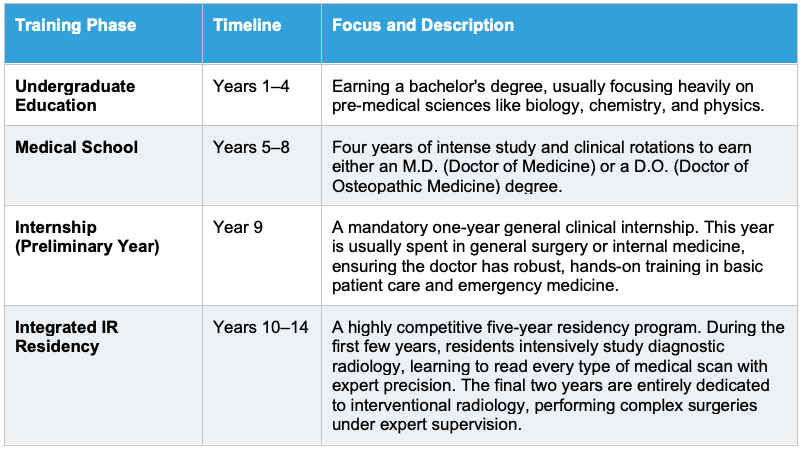
To become a board-certified interventional radiologist, a physician must complete 14 years of higher education and clinical training. Here is a breakdown of what that journey looks like:
Dual Board Certification: The Highest Standard of Care
Once this marathon of training is complete, the doctor must pass a series of intensive examinations administered by the American Board of Radiology (ABR).
Because of the unique dual-nature of their skillset, modern interventional radiologists receive a Dual IR/DR Certificate. This official designation certifies that they are fully qualified board-certified physicians in both Diagnostic Radiology and Interventional Radiology. They are uniquely equipped to look at a patient’s scan, diagnose the underlying issue, design a targeted treatment plan, and physically execute the procedure.
Why the Doctor’s Training Matters to You
When you choose an interventional radiologist for your care, you aren’t just choosing a doctor who knows how to operate a machine. You are choosing a specialist who has dedicated more than a decade of their life to mastering the intricate anatomy of the human vascular system and the cutting-edge physics of medical imaging.
At My AIM Health, our interventional radiologists bring this elite level of training directly to our community. Whether we are treating peripheral artery disease to save a patient’s leg, or performing a genicular artery embolization to reduce chronic knee pain, our team utilizes these highly precise, low-risk techniques to help patients reclaim their quality of life without the trauma of open surgery.
If you are dealing with chronic pain, vascular issues, or conditions like BPH or fibroids, you don’t always have to go under the knife. The pinhole revolution is here, and it is led by the highly trained hands of interventional radiologists.
Frequently Asked Questions
Is interventional radiology surgery?
Not in the traditional sense. Interventional radiology uses imaging-guided catheters and small instruments through tiny skin nicks or blood vessels, rather than large open incisions, so most procedures don’t require general anesthesia or an overnight hospital stay.
What conditions can interventional radiology treat?
IR is commonly used to treat uterine fibroids, an enlarged prostate (BPH), peripheral artery disease, chronic knee pain, and varicose veins, among many other conditions.
How long does it take to become an interventional radiologist?
Roughly 14 years of combined undergraduate education, medical school, internship, and a five-year integrated IR residency, followed by board certification through the American Board of Radiology.
Is an interventional radiologist a real doctor?
Yes — interventional radiologists are board-certified physicians, typically holding a Dual IR/DR Certificate that qualifies them in both diagnostic and interventional radiology.
If you are dealing with chronic pain, vascular issues, or conditions like BPH or fibroids, you don’t always have to go under the knife. Schedule a consultation with My AIM Health to learn whether a minimally invasive interventional radiology procedure is right for you.