Medically reviewed by Arnold Saha, MD, Interventional Radiologist
When we think about cardiovascular health, our minds jump to intense cardio, gym memberships, or a new prescription. But one of the most effective, science-backed treatments for your vascular system is right outside your front door: walking.
That’s not a wellness cliché. For patients with peripheral artery disease (PAD) — a condition where plaque narrows the arteries feeding the legs — structured walking is a first-line treatment, recommended in national cardiovascular guidelines alongside medication. Walking for peripheral artery disease isn’t a substitute for care. It is care.
In interventional radiology and vascular medicine, we see firsthand how blood vessels respond to physical activity. Your arteries aren’t passive pipes. They’re dynamic, living organs — and a regular walk acts like a daily dose of targeted medicine for your circulatory system.
Here’s the science behind why.
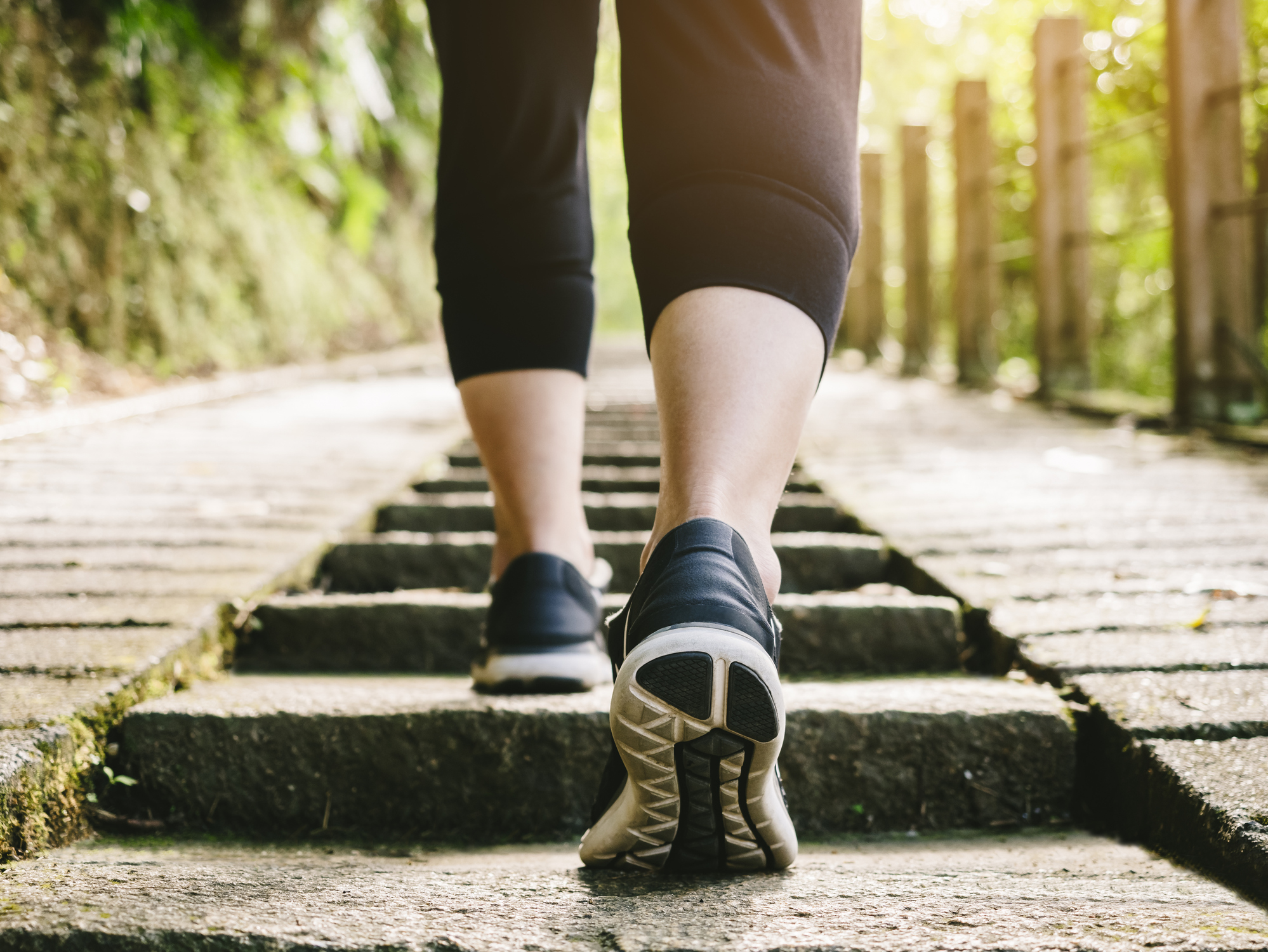
Why Walking Counts as Real Vascular Treatment
Most exercise advice is about the heart. Walking’s effect on the peripheral circulation — the arteries and veins in your legs — works through several distinct mechanisms, and each one matters for a different patient.
Walking Triggers Nitric Oxide, Your Body’s Natural Vessel Dilator
What Shear Stress Does to Your Artery Walls
When you walk, your heart pumps more blood through your circulatory system. As that blood moves, it creates friction against the inner lining of the vessel wall — the endothelium. This gentle mechanical force is called shear stress.
Shear stress signals your arterial walls to release nitric oxide, a compound that tells the smooth muscle surrounding your arteries to relax and widen. The result is lower blood pressure and blood that flows more freely. It’s your body’s built-in mechanism for opening up the pathways, and it switches on every time you go for a walk.
Walking for Peripheral Artery Disease: Building Natural Bypass Vessels
For patients with PAD, walking can feel uncomfortable or outright painful. That pain has a name — claudication — and it’s the reason many people with PAD walk less and less over time, which makes the underlying problem worse.
Collateral Circulation: Your Body’s Own Bypass
When an artery in the leg is narrowed, regular walking creates a controlled demand for oxygen in the calf and thigh muscles. In response, the body releases growth factors that encourage small surrounding vessels to enlarge and form new pathways around the blockage.
This is collateral circulation — your body building its own mini-bypass routes to restore blood flow. It’s the reason a treatment that sounds counterintuitive (walk until it hurts) is one of the best-supported interventions in vascular medicine.
Why PAD Leg Pain Improves With Rest
Claudication has a distinctive pattern: cramping or aching in the calf, thigh, or buttock that starts after a predictable walking distance and goes away within a few minutes of stopping. That pattern is the signature of a demand-supply mismatch — the muscle needs more blood than the narrowed artery can deliver.
If your leg pain doesn’t follow that pattern, it may not be PAD. Pain that persists at rest, that’s present when you first stand up, or that comes with back or hip symptoms deserves a different workup.
Supervised Exercise Therapy (SET) for PAD
Structured, supervised walking programs consistently outperform “just go for walks” advice for PAD. Supervised exercise therapy typically runs three sessions a week for 12 weeks on a treadmill with a trained clinician monitoring you — and since 2017, Medicare has covered SET for patients with symptomatic PAD. Ask your vascular specialist whether a SET program is available to you.
Walking Fights Inflammation and Plaque Buildup
Atherosclerosis — the hardening and narrowing of the arteries — is driven by chronic inflammation and elevated LDL (“bad”) cholesterol. Regular walking helps modify these risk factors:
Lowers Systemic Inflammation
Physical activity is associated with reduced inflammatory markers, the ones implicated in damage to the delicate endothelial lining of your blood vessels.
Improves Cholesterol Profiles
Walking raises HDL (“good”) cholesterol, which acts like a cleanup crew — collecting excess cholesterol from the bloodstream and carrying it back to the liver before it contributes to arterial plaque.
Enhances Insulin Sensitivity
By helping muscles use glucose more efficiently, walking supports steadier blood sugar. That matters for the small vessels: over years, poorly controlled diabetes damages micro-vessels and contributes to diabetic neuropathy and slow-healing wounds in the feet.
The Calf Muscle Pump: How Walking Supports Your Veins
Walking keeps your arteries flexible, but it does just as much for your veins.
Your calf muscles act as a secondary “heart” for the lower body. Every step contracts the calf, squeezing the deep veins and pushing blood back up toward your heart against gravity. This keeps blood from pooling in the lower legs, reducing swelling, heaviness, and pressure on the surface veins.
If you already have leg heaviness, aching, or visible varicose veins that walking alone doesn’t relieve, vein treatment for leg heaviness and varicose veins addresses the underlying valve problem directly.
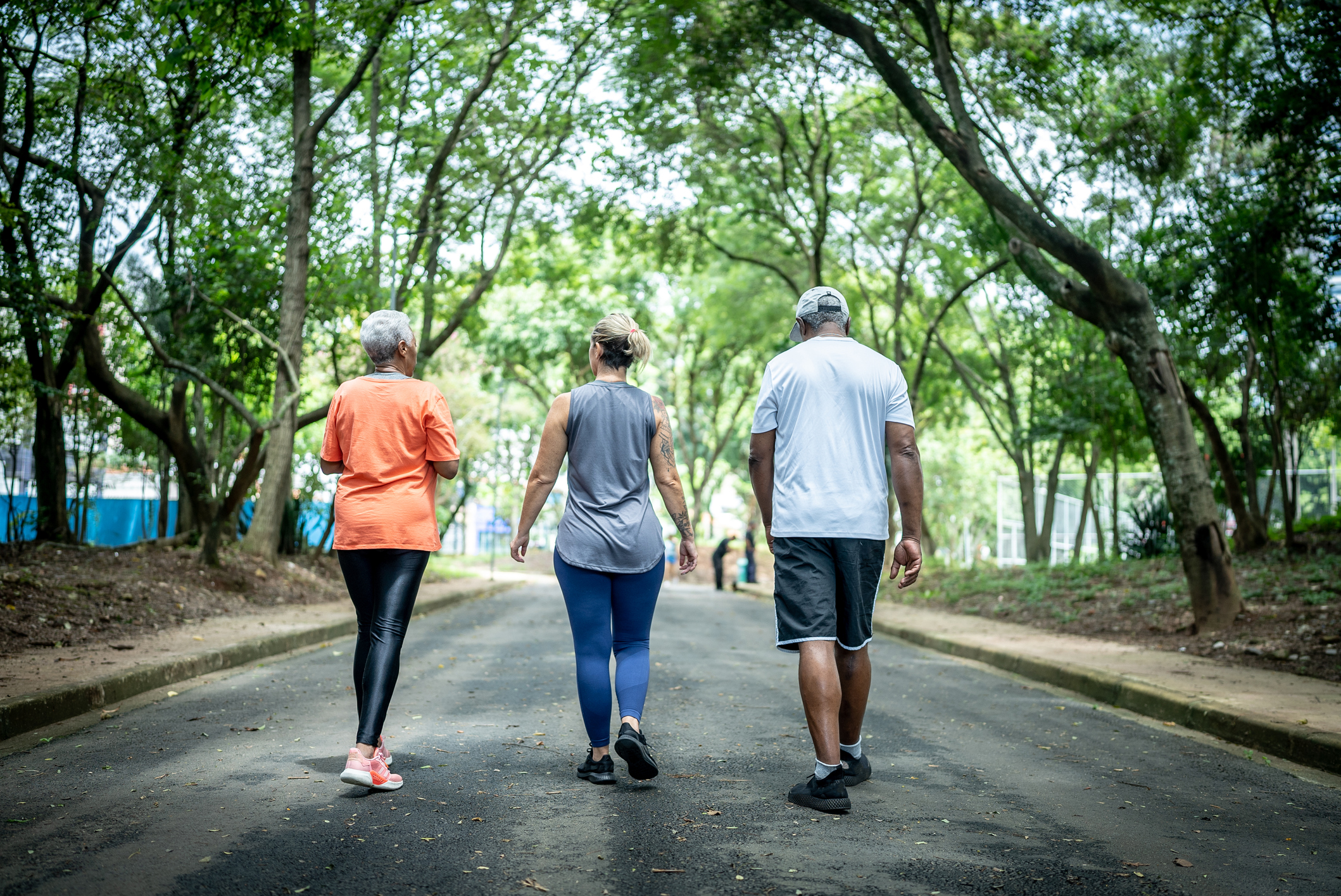
How to Take Your Daily “Dose” of Walking
You don’t need to train for a marathon. Consistency beats intensity.
Aim for Consistency
Thirty minutes of brisk walking three to five days a week is a solid baseline for overall vascular health.
Break It Up
If 30 minutes at once is too much, three 10-minute walks across the day deliver comparable cardiovascular benefit.
The Walk-Rest-Walk Method for Claudication
If you’ve been diagnosed with PAD and your physician has cleared you to exercise, the walk-rest-walk method is the standard approach: walk until you feel moderate — not severe — discomfort, stop and rest until the pain fully subsides, then resume. Over weeks, this progressively expands your pain-free walking distance.
Two cautions. First, get diagnosed before you start. Leg pain when walking has several causes, and the right response is different for each. Second, if knee osteoarthritis or joint pain makes walking painful, treat that too — patients often stop walking because of a joint, then lose the circulatory benefit as well.
When Walking Isn’t Enough: Warning Signs to Get Evaluated
Walking is a foundation, not a cure-all. Some symptoms mean the blockage has progressed beyond what exercise can compensate for. Contact a vascular specialist promptly if you have:
- Leg or foot pain at rest, especially at night, that eases when you dangle your leg off the bed
- A sore, ulcer, or wound on the foot or toes that isn’t healing
- A foot that is cold, pale, bluish, or numb compared to the other side
- Walking distance that keeps shrinking despite a consistent walking routine
- Sudden, severe leg pain with coldness or loss of sensation — this is an emergency
These point toward advanced disease, and walking through them is not the answer. Modern minimally invasive PAD treatment can restore circulation through a pinhole access point, on an outpatient basis, so that walking becomes possible again. For patients with overlapping chronic foot and leg pain, our vascular and podiatry teams evaluate together.
Vascular Care at My AIM Health in the Phoenix Valley
At My AIM Health, our board-certified interventional radiologists diagnose and treat the circulation problems behind leg pain, swelling, and non-healing wounds — using image-guided, outpatient techniques that don’t require open surgery or general anesthesia.
If you’re walking less than you used to because your legs won’t let you, that’s worth investigating. We see patients at three Phoenix Valley clinics in Scottsdale, Gilbert, and Peoria and offer a full range of minimally invasive treatments for arterial and venous disease.
Put on a comfortable pair of shoes and take that first step. And if that step hurts, schedule a consultation or call (480) 907-7572 — your arteries will thank you.